What 'Graduated Compression' Actually Means (and Why Regular Tight Clothes Aren't the Same)
Quick Answer: Graduated compression applies the tightest pressure at your extremities (ankles, wrists) and gradually less pressure moving up the limb, which mechanically assists blood flow back toward your heart — plain tight-fitting fabric applies uniform pressure and doesn’t create that same directional effect.
That snug pair of leggings and true compression gear can look identical on a hanger and do very different things once you’re moving.
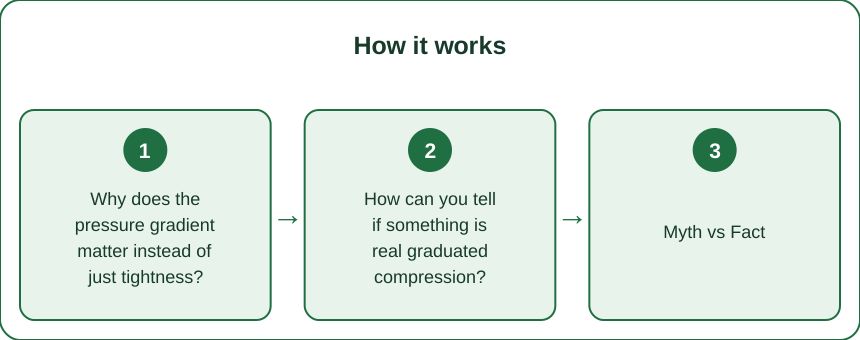
Why does the pressure gradient matter instead of just tightness?
Blood returning to your heart from your legs works against gravity, relying partly on muscle contraction and vein valves. A pressure gradient — highest at the ankle, decreasing up the calf and thigh — mechanically nudges blood flow in that upward direction.
Uniformly tight fabric, by contrast, doesn’t create this directional push — it may feel supportive but isn’t engineered to move fluid the same way.
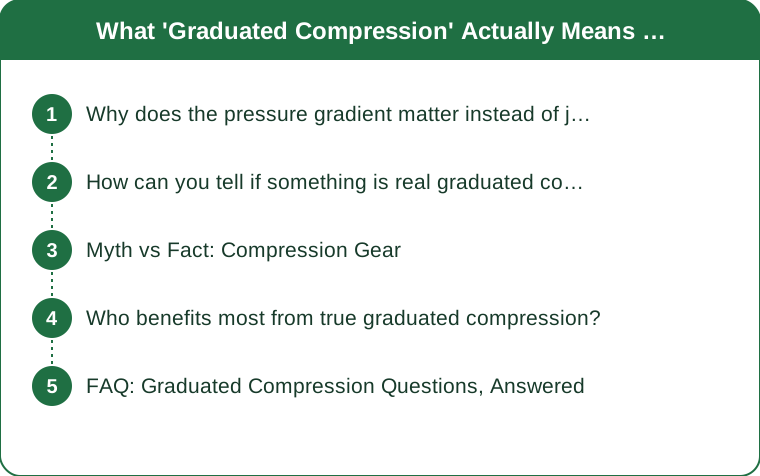
How can you tell if something is real graduated compression?
1. Check the product description for mmHg ratings (millimeters of mercury) — genuine medical or athletic-grade graduated compression will specify a pressure range (like 15-20 mmHg), often varying by zone.
2. Feel for a pressure difference as you run your hand up the garment — real graduated compression should feel measurably tighter at the ankle than at the knee.
3. Be skeptical of ‘compression’ as a marketing word alone on a product with no pressure specification — it’s a commonly overused term on garments that are simply snug-fitting, not engineered compression.
Myth vs Fact: Compression Gear
Myth: Any tight athletic wear counts as compression. Fact: Only garments engineered with a true pressure gradient qualify — snugness alone isn’t the mechanism.
Myth: More compression is always better. Fact: Too-high compression without a medical need can restrict circulation rather than help it — moderate, well-fitted graduated compression outperforms ‘as tight as possible.’
Myth: Compression socks and compression leggings work identically. Fact: They’re engineered for different pressure zones and use cases — socks typically target ankle-to-calf recovery, while leggings often prioritize thigh support and muscle stabilization during activity.
Who benefits most from true graduated compression?
People who stand or sit for long stretches, travelers on long flights, postpartum recovery, and endurance athletes managing swelling or fatigue tend to see the clearest benefit. If you have a diagnosed circulation condition, talk to your doctor about the specific mmHg level recommended for you — that’s a medical decision, not a shopping one.
FAQ: Graduated Compression Questions, Answered
What mmHg level is right for everyday wear?
15-20 mmHg is a common general-use range; higher levels (20-30+) are typically medical-grade and should be doctor-recommended.
Does graduated compression actually reduce muscle soreness?
Some evidence supports modest recovery benefits, particularly for reducing perceived soreness after long endurance efforts, though results vary by individual.
Can you wear graduated compression every day?
For most healthy people, yes — but check with a doctor first if you have any circulation condition, since compression needs vary significantly by diagnosis.
TL;DR:
- True graduated compression has a pressure gradient — tightest at the ankle, decreasing upward
- Check for an mmHg rating; ‘compression’ alone on a label doesn’t guarantee the mechanism
- More pressure isn’t automatically better — moderate, well-fitted beats maximal
- Anyone with a diagnosed circulation condition should get a doctor’s specific mmHg recommendation
This is general information, not medical advice — for a specific circulation concern, the right compression level is a conversation with your doctor, not a label read.
See It in Motion
Seen here: High Waist Embossed Yoga Leggings with Side Pockets — shop it on bubblelime.com
Keep Reading
This article is for general informational and styling purposes only. Fit, sizing, and product availability may vary.