Do Compression Garments Actually Do Anything — or Is It Just a Tight Feeling?
Quick Answer: Graduated compression (tighter at the ankle, looser higher up) has decent evidence for reducing swelling and perceived leg fatigue, especially for standing jobs, travel, and recovery after long runs. Evidence for major performance enhancement during exercise is weaker — the clearest benefit is post-activity and circulation-related, not a power boost.
Compression gear promises everything from better performance to faster recovery to less swelling — but those claims aren’t all backed equally well.
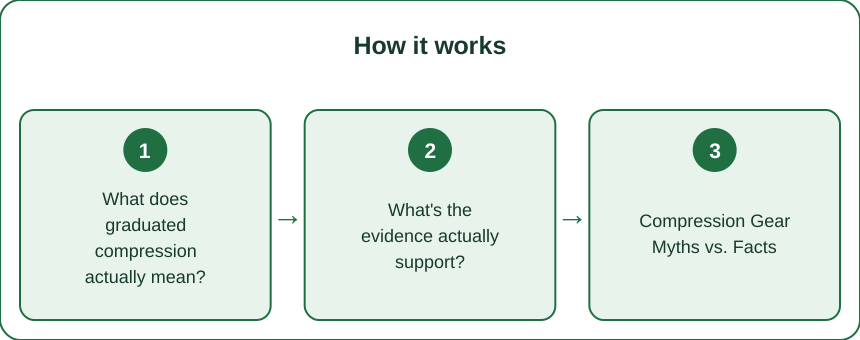
What does graduated compression actually mean?
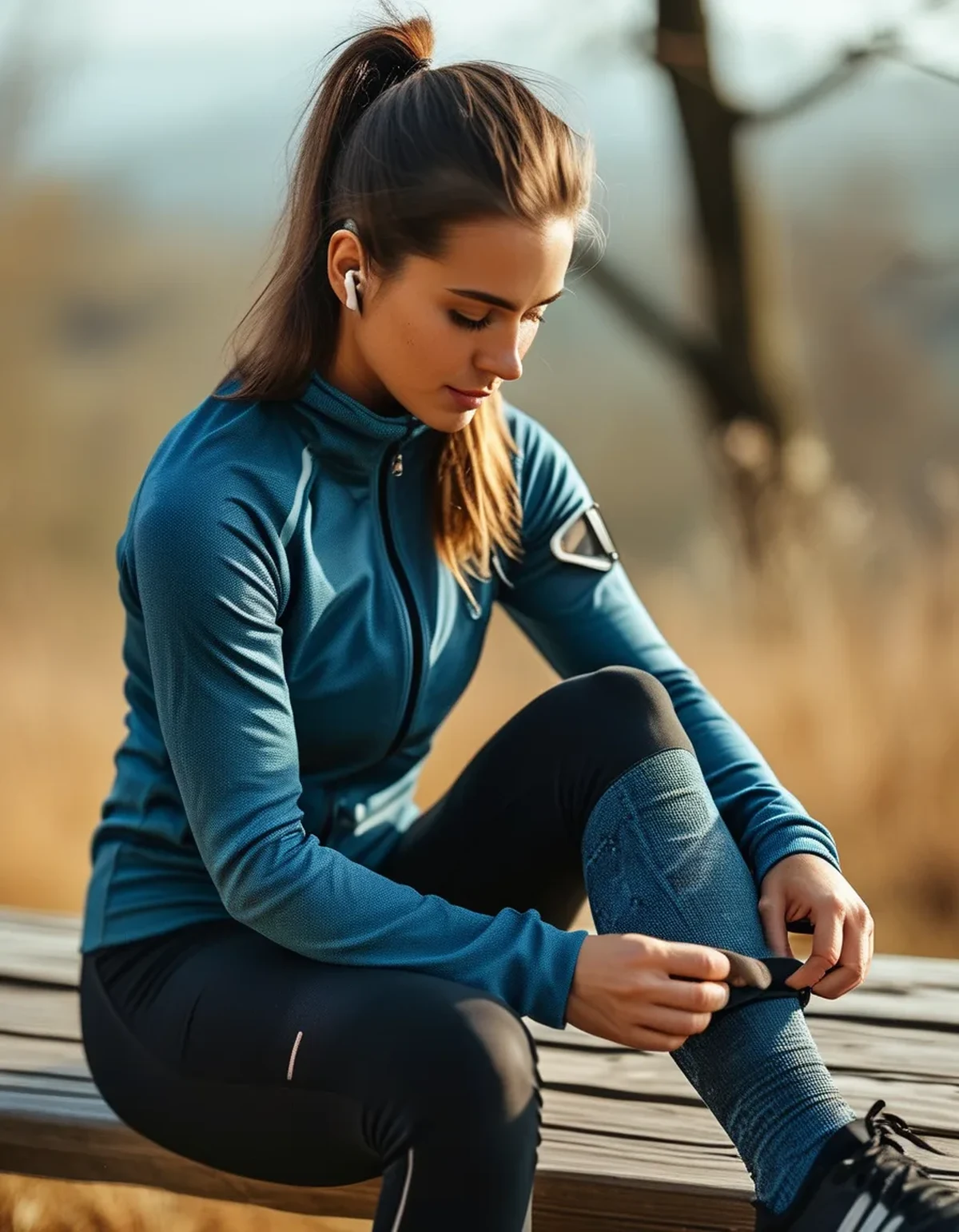
Graduated compression means the garment is tightest at the ankle or wrist and gradually loosens moving up the limb — this gradient is what helps push blood back toward the heart, rather than just squeezing uniformly. A sleeve or sock without this gradient is just tight fabric, not functional compression.
What’s the evidence actually support?
The strongest evidence supports reduced swelling (especially for travel and standing jobs) and reduced perceived fatigue in the legs after long periods of standing or running. Evidence for compression improving in-the-moment athletic performance is much weaker and mixed across studies.
Compression Gear Myths vs. Facts
Myth: Compression garments boost your actual running performance. Fact: Most rigorous studies show negligible performance improvement — the benefit is mostly felt in recovery and comfort, not speed or power.
Myth: Tighter is always better. Fact: Compression that’s too tight for your size can restrict circulation rather than assist it — proper graduated compression depends on correct sizing, not maximum tightness.
When should you actually wear compression, and when not to?
Wear it: long flights, jobs requiring hours of standing, post-long-run recovery, or if you already have mild circulation-related leg fatigue. Skip it: as a substitute for actual training adaptations, or if a doctor has flagged a circulation condition where added compression needs medical guidance rather than an over-the-counter sock.
FAQ: Compression Garment Questions, Answered
How do I know if I’m wearing the right compression size?
Measure calf circumference and follow the brand’s specific sizing chart — compression garments are far more size-sensitive than regular socks, and the wrong size undermines the whole benefit.
Can I sleep in compression socks?
Generally not recommended without medical guidance — sleep compression garments are a different, lower-pressure product designed specifically for overnight use.
Do compression garments help with existing swelling from a medical condition?
They can help mild, activity-related swelling, but medical swelling (from a diagnosed condition) should be guided by a doctor’s specific compression recommendation, not a general over-the-counter product. This is general information, not medical advice.
TL;DR:
- Graduated compression (tight at ankle, looser above) has real evidence for reducing swelling and fatigue
- Performance-boosting claims are weaker than recovery and comfort claims
- Correct sizing matters more than maximum tightness
- Use it for travel, standing jobs, and recovery — not as a substitute for training
Compression gear does something real — just not the something most marketing leads with.
See It in Motion
Seen here: Bootcut Yoga Pants with Side Pockets — shop it on bubblelime.com
Keep Reading
This article is for general informational and styling purposes only. Fit, sizing, and product availability may vary.