Do You Actually Need Compression Wear for Flying? Here's When It Matters Most
Quick Answer: Compression wear meaningfully reduces leg swelling and mild discomfort on flights over roughly 4 hours, and is specifically recommended for anyone with elevated blood clot risk factors — for shorter flights or low-risk travelers, it’s a comfort choice rather than a necessity.
You’ve seen compression socks recommended for every flight regardless of length, and you’re wondering if it’s genuinely necessary or just travel-influencer advice. The real answer depends heavily on flight duration and your individual risk factors.

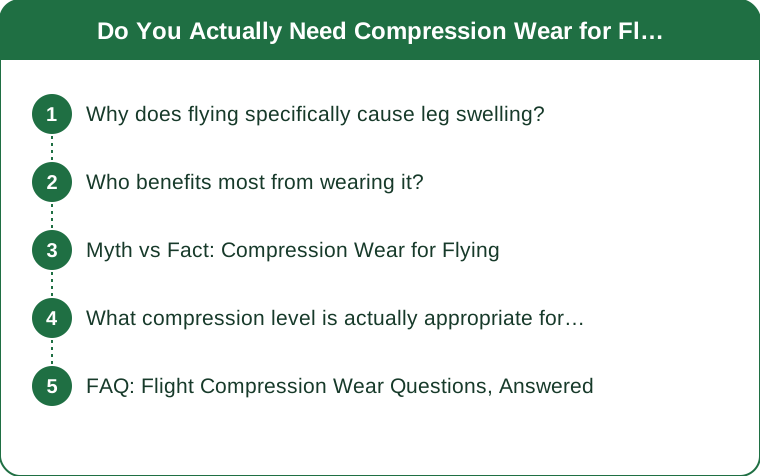
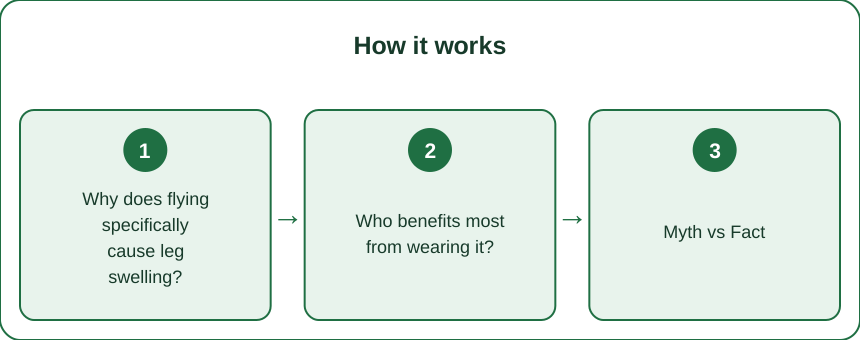
Why does flying specifically cause leg swelling?
Prolonged sitting reduces circulation efficiency in your legs, and cabin pressure changes plus limited movement compound this — blood and fluid pool more in the lower legs than during normal daily sitting, which is why flight-specific swelling tends to be more noticeable than a long car ride or workday.
Graduated compression wear counters this by applying more pressure at the ankle, less higher up the leg, mechanically assisting venous blood flow back toward the heart during the hours you’re not moving much.
Who benefits most from wearing it?
- Anyone on flights longer than about 4 hours
- People with a personal or family history of blood clots (DVT)
- Pregnant travelers, who have elevated clot risk
- Anyone with varicose veins or a job requiring lots of standing/sitting already
- Travelers who notice leg swelling or heaviness on flights even without a specific risk factor
For a short 1-2 hour flight with no risk factors, the benefit is much smaller and largely a comfort preference rather than a meaningful health consideration.

Myth vs Fact: Compression Wear for Flying
Myth: Compression socks alone fully prevent blood clot risk on flights. Fact: They reduce risk factors like swelling and sluggish circulation, but aren’t a complete substitute for movement — walking the aisle periodically and staying hydrated remain important alongside compression wear, not instead of it.
Myth: Any tight sock works the same as medical-grade graduated compression. Fact: Actual graduated compression (measured in mmHg, typically 15-20 for travel use) is engineered with a specific pressure gradient — a generic tight sock doesn’t replicate that mechanical effect.
Myth: Compression wear is only relevant for older travelers. Fact: Risk factors like pregnancy, family history, or even just very long-haul flights apply across age groups, not exclusively to older travelers.
What compression level is actually appropriate for flying?
15-20 mmHg is the commonly recommended range for general travel use — enough to meaningfully help circulation without needing a prescription-level medical fitting.
Higher compression levels (20-30 mmHg and above) are typically intended for specific medical conditions and often require professional fitting — not necessary for general travel unless a doctor has recommended that level for a specific reason.
FAQ: Flight Compression Wear Questions, Answered
Do I need compression socks for a 90-minute flight?
Generally not necessary unless you have a specific risk factor — the benefit is far more relevant for flights over 4 hours.
Can I wear compression socks the entire flight without issue?
Yes, for travel-grade compression (15-20 mmHg) — that level is designed for extended wear; just remove them during layovers if legs need a break.
Is walking the cabin periodically still necessary if I’m wearing compression socks?
Yes — compression wear and movement address the same underlying issue through different mechanisms, and combining both is more effective than relying on either alone. This is general information, not medical advice.
TL;DR:
- Compression wear meaningfully helps on flights longer than about 4 hours
- Pregnancy, clot history, and varicose veins all raise the case for wearing it regardless of flight length
- 15-20 mmHg graduated compression is the standard travel-appropriate level
- It complements, but doesn’t replace, periodic movement and hydration during a flight
This is general information, not medical advice — match the choice to your flight length and personal risk factors, not a blanket rule.
See It in Motion
Seen here: High Waist Yoga Leggings with Side Pockets — shop it on bubblelime.com
Keep Reading
This article is for general informational and styling purposes only. Fit, sizing, and product availability may vary.