Is Compression Wear Safe and Helpful During Pregnancy? What Actually Changes
Quick Answer: Compression wear is generally considered safe and often helpful during pregnancy for managing leg swelling and varicose vein discomfort, but pregnancy-specific compression garments (rather than standard compression gear) are usually recommended, since standard graduated compression may not account for the changing shape and circulation needs of a pregnant body.
Swollen ankles and achy legs are an extremely common pregnancy experience, and compression wear is one of the more genuinely useful, low-risk tools for managing it — with a few pregnancy-specific caveats.
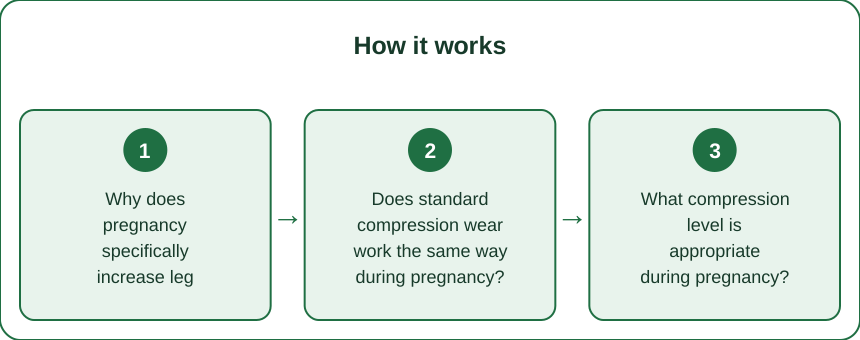
Why does pregnancy specifically increase leg swelling and varicose vein risk?
Increased blood volume, hormonal changes affecting vein elasticity, and the growing uterus placing pressure on pelvic veins all combine to slow venous return from the legs during pregnancy, which is why swelling and varicose veins are so common, especially later in pregnancy.
Does standard compression wear work the same way during pregnancy?
Not always ideally — standard graduated compression garments are designed for a non-pregnant body shape and circulation pattern. Maternity-specific compression garments are cut differently to accommodate a growing belly and are designed with pregnancy’s specific circulation changes in mind, generally providing more appropriate support than standard compression repurposed for pregnancy.
What compression level is appropriate during pregnancy?
Mild to moderate compression (typically 15-20 mmHg) is commonly recommended for general pregnancy swelling and comfort, though higher compression levels for more significant varicose vein issues should be discussed with your doctor, as the appropriate level can depend on individual circulation concerns.
What Nobody Tells You About Pregnancy Compression Wear
Here’s what’s often left out: compression wear works best as a preventive, all-day habit rather than something you put on only once swelling is already significant. Putting on compression socks or leggings first thing in the morning, before swelling has had a chance to accumulate throughout the day, tends to be considerably more effective than trying to reduce swelling that’s already set in by afternoon or evening.
FAQ: Pregnancy Compression Wear Questions, Answered
Is it safe to wear compression leggings during pregnancy workouts?
Generally yes, and many pregnant people find it comfortable and supportive, though checking with your doctor about your specific exercise routine and any pregnancy complications is always a reasonable step. This is general information, not medical advice.
Can compression wear help with varicose veins that developed during a previous pregnancy?
It can help manage discomfort and mild progression, though existing varicose veins from a prior pregnancy are worth mentioning to your doctor for a more complete evaluation and management plan.
When during pregnancy should compression wear typically be introduced?
Many people start noticing benefit from the second trimester onward as swelling becomes more common, though there’s no harm in starting earlier if you’re experiencing symptoms sooner or have a personal or family history of varicose veins.
TL;DR:
- Compression wear is generally safe and often helpful for pregnancy-related leg swelling
- Maternity-specific compression garments fit the changing pregnant body better than standard compression gear
- Mild to moderate compression (15-20 mmHg) is commonly recommended for general swelling
- Putting compression on first thing in the morning works better than reacting to swelling later in the day
Check with your doctor about your specific compression needs during pregnancy — this is general information, not medical advice.
See It in Motion
Seen here: High Waist 8” Yoga Shorts — shop similar styles on bubblelime.com
Keep Reading
This article is for general informational and styling purposes only. Fit, sizing, and product availability may vary.