Compression for Standing Jobs: The All-Day-On-Your-Feet Survival Layer
Nurses, teachers, stylists and retail veterans share a uniform layer civilians never see: compression socks — the standing profession’s answer to the 6pm leg ache and the end-of-shift swelling. The all-day guide: why they work, how to wear them and the routine that completes the system.

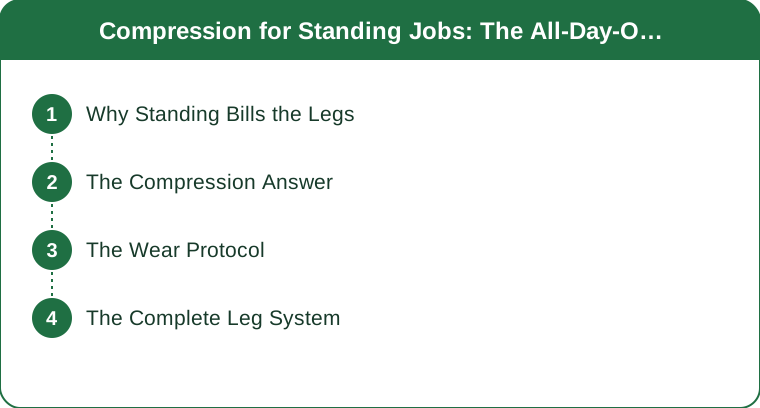
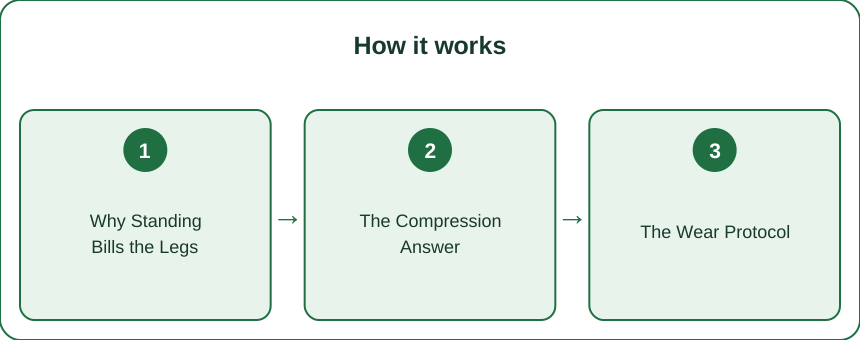
Why Standing Bills the Legs
The all-day physics: standing still is harder on legs than walking (the calf muscle is the leg’s second heart — walking pumps blood upward; motionless standing lets it pool; the heaviest-legs professions are the stand-STILL ones), the end-of-shift symptoms (the ache, the visible sock-line swelling, the tired-legs evening — fluid accumulation with a schedule), and the long-term stakes (standing professions carry higher varicose-vein rates — the family-history crowd especially; the prevention conversation starts with the socks and the movement habits below).
The Compression Answer
How the socks help: graduated compression assists the return trip (tightest at the ankle, easing up — the external pump support that reduces pooling and the swelling it becomes; the standing-job evidence is among compression’s best), the spec guide (15-20 mmHg is the standing-shift standard — effective and all-day wearable; 20-30 for the heavier-symptom or clinician-advised tier), the fit essentials (measured calves — the size chart is ankle-and-calf circumference, taken in the MORNING before swelling; the rolled-down-band sock is a tourniquet, refit immediately), and the modern-options note (the category finally got style — the knee-high in actual colors and the sleeve tier for the sock-preference crowd; the beige-medical era is optional).

The Wear Protocol
The daily rhythm: on in the morning before swelling starts (the pre-emptive wear beats the rescue wear — socks on at 7am outperform socks on at lunch), off in the evening (all-day is the job; overnight is not the default — the evening removal plus the legs-up-the-wall five minutes is the shift’s closing ritual), the wash-and-rotation reality (compression fades with wear and washing — the 3-6 month replacement rhythm for daily wearers; the two-three pair rotation extends everything), and the symptom flags (one-sided swelling, skin changes or pain beyond tired-legs are doctor territory — the socks manage normal; they don’t diagnose abnormal).
The Complete Leg System
Beyond the socks: the micro-movement habit (calf raises at the station, the two-minute walk every hour, weight-shifting — the muscle pump activated on schedule; the standing job’s exercise-snacks), the footwear foundation (cushioned, supportive shoes are the system’s other half — the compression sock in dead flats is half a solution; the on-your-feet professions’ shoe budget is health spending), the evening recovery tier (legs elevated, the calf stretch, the foam-roll pass — ten minutes that reset tomorrow), and the strength layer (calf raises and the leg-day habit build the pump itself — the trained calf pools less). The socks are the layer; the system is the career-length answer.
On before swelling, 15-20 mmHg measured, off with legs up, move the calves hourly. Compression is the standing profession’s uniform layer — and the system around it makes the career sustainable.
See It in Motion
Seen here: High Waist Bootcut Yoga Pants with Side Pockets — shop it on bubblelime.com
Keep Reading
This article is for general informational and styling purposes only. Fit, sizing, and product availability may vary.