Compression Socks for Standing All Day vs Running: Not the Same Sock
Quick Answer: Standing all day and running load your legs oppositely - standing lets blood pool because your calf muscles barely pump, while running keeps the pump working hard. So the standing sock is doing real circulatory work (15-20 mmHg graduated, cushioned foot, put on before the shift), while the running sock is mostly about comfort, vibration damping, and modest recovery help. Buy by measured calf and ankle size, never shoe size alone - and one-sided or sudden swelling is a doctor visit, not a sock purchase.
The same knee-high sock gets marketed to the nurse on a twelve-hour shift and the runner training for a fall half marathon, as if their legs have the same problem. They almost have opposite problems - which is why one of them gets dramatic relief from compression and the other gets, mostly, nice socks.

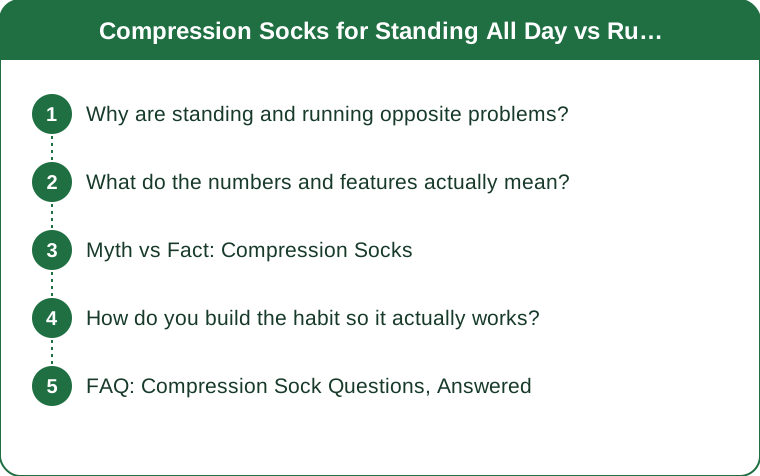
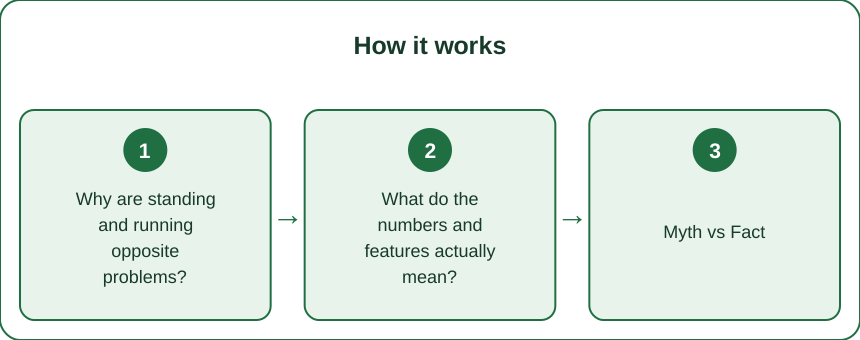
Why are standing and running opposite problems?
Because the calf muscle is half of your circulation, and only one of the two activities uses it.
Your veins need a pump they do not have. Blood returning from your feet climbs against gravity through veins with one-way valves, powered mainly by the second heart - the calf muscles squeezing veins with every contraction. Walking and running fire that pump constantly.
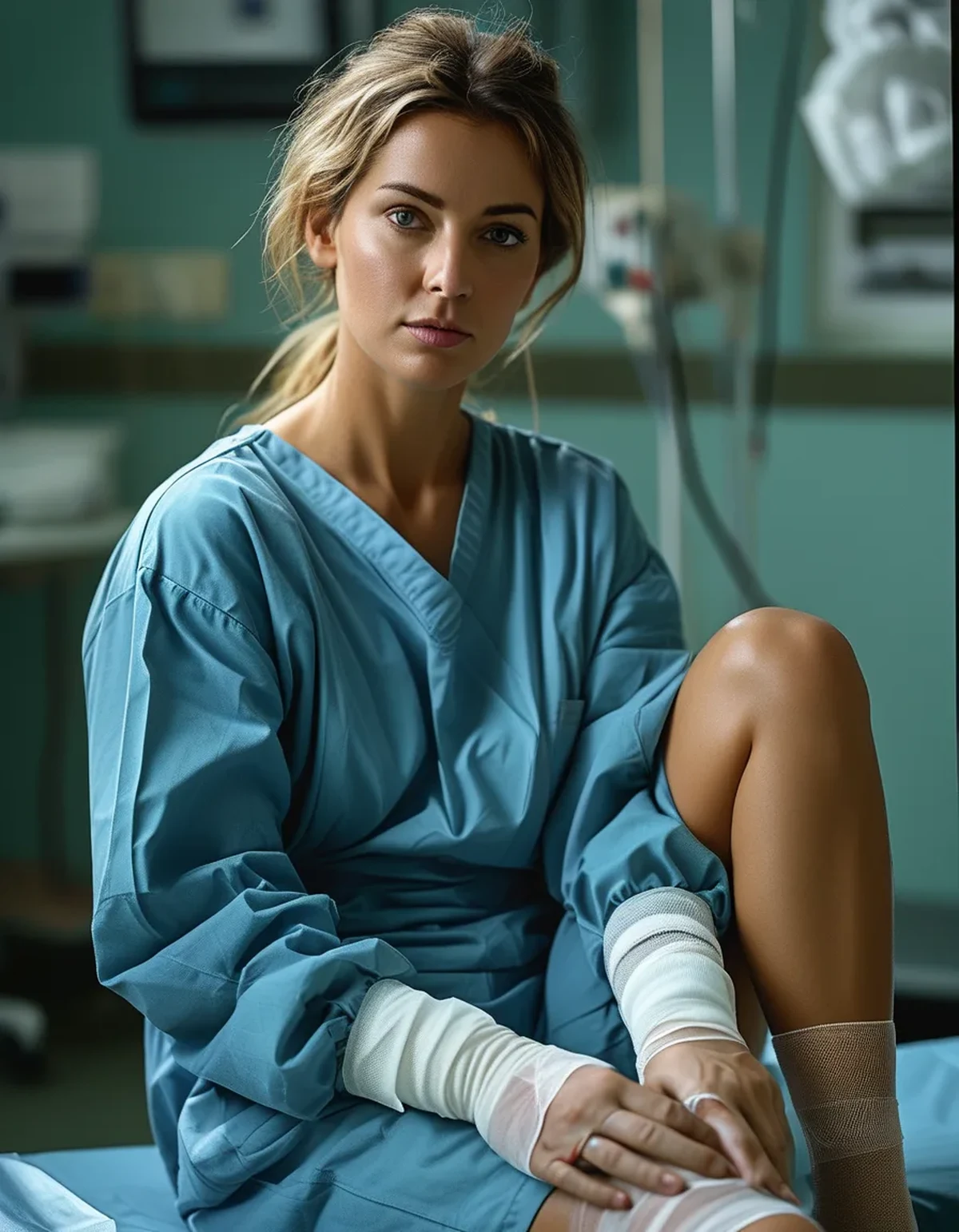
Standing still switches the pump off while leaving gravity on. A retail shift, a nursing shift, a day of teaching - hours of upright stillness mean blood and fluid pool in the lower legs, valves strain against a standing column of blood, and you get the classic end-of-shift signature: tight ankles, sock-line grooves, heavy aching calves, shoes that fit at 7am and pinch at 7pm. This is where graduated compression genuinely earns its reputation: the sock provides from outside a version of the squeeze the idle muscle is not providing, tightest at the ankle and easing upward, sustaining the return flow. Research on people who stand for work fairly consistently shows less swelling and less end-of-day ache with 15-20 mmHg graduated socks.
Running has the opposite economy. The pump is working beautifully - what running adds is repetitive impact, muscle vibration, and hours of pounding. During-run compression shows small or no performance effects in most studies, though many runners like the secure feel and reduced calf jiggle; the better-supported use is afterward, where compression appears to modestly help perceived soreness and that heavy-leg feeling.
Same garment category, different job description: circulation assistance versus comfort and recovery. The construction follows.
What do the numbers and features actually mean?
The mmHg rating is the dose. Compression is measured in millimeters of mercury, stated as a range. 8-15 is light - barely more than a snug sock. 15-20 is the everyday workhorse: the standard over-the-counter dose for standing shifts, travel, and general swelling-prone days, strong enough to matter and comfortable enough to forget. 20-30 is firm - commonly used for pronounced swelling, varicose veins, and post-surgical or pregnancy situations, and at this level a clinician’s guidance is worth having, both for fit and because the right dose depends on why you need it. Higher grades are medical territory, prescribed and professionally fitted.
Graduated is the word that matters. A proper sock is tightest at the ankle with pressure decreasing up the calf - that gradient is the mechanism. Uniform-squeeze tubes and shapewear-style sleeves without a stated gradient are costume compression.
For the standing sock, prioritize: true graduated 15-20, knee-high length - the pooling problem lives in the calf, so ankle socks miss the point - a cushioned foot bed for hard floors, a wide comfortable top band that does not bite behind the knee, and breathable fabric you can survive in for twelve hours.
For the running sock, prioritize: fit inside your actual running shoe - cushioning changes toe box volume - moisture management above all, flat seams, and whatever calf compression level feels supportive without numbness. Calf sleeves without a foot are a legitimate running option for during-workout feel; they are the wrong tool for all-day standing, where fluid just parks in the uncovered foot.
And measure, do not guess: calf circumference at the widest point and ankle at the narrowest, in the morning before swelling - sizing charts run on those numbers, and a sock sized only by shoe size on a muscular or swollen calf becomes a tourniquet at the top band.
Myth vs Fact: Compression Socks
Myth: Tighter is better. Fact: The dose is graduated to the job - going firmer than needed trades comfort for nothing and can dig at the band or fold over, and a folded band concentrates pressure exactly where it should not. If it leaves deep grooves behind the knee or tingles, the size or grade is wrong.
Myth: Compression makes you run faster. Fact: Performance studies are largely a shrug - small effects at best, mostly on perceived comfort. The honest pitch is fewer vibrations during, slightly fresher calves after. Buy them as comfort and recovery gear and they will never disappoint you.
Myth: You should sleep in them after a hard day. Fact: Graduated compression is engineered for upright hours, when gravity is the opponent. Lying flat removes the problem it solves, and routine overnight wear is only appropriate when specifically prescribed. Off at night is the default.
Myth: One pair fits any calf that matches the shoe size. Fact: Shoe size says nothing about calf circumference, and calf circumference is most of the fit. Measured sizing is the difference between therapeutic and miserable.
Myth: Swelling is swelling - socks fix it. Fact: Symmetrical end-of-day swelling in a standing worker is the classic sock use case. Swelling in one leg only, sudden onset, pain or warmth in the calf, skin color changes, or swelling that persists after elevation are different stories entirely - those need medical assessment promptly, not compression. And anyone with diabetes, peripheral artery disease, or significant circulation issues should get professional guidance before wearing compression at all. This is general information, not medical advice.
How do you build the habit so it actually works?
Put them on before the day inflates. The single most important usage rule for standing work: socks go on in the morning, before swelling begins - compressing a leg that has already ballooned is squeezing a full water balloon. Sit on the bed, bunch the sock to the heel, work it up smoothly, no folds at the top.
Wear them for the exposure, not around the clock. Shift hours, long-standing days, flights, long drives - then off in the evening, letting skin breathe overnight. Elevating your feet for ten minutes after a shift is the free companion therapy that makes the socks look even better.
Run the two-week trial. Score your end-of-day legs for a few normal days first - ankle tightness, ache out of ten, sock grooves. Then two weeks of consistent morning-on wear, same score each evening. Standing workers usually see the difference inside a week; if nothing changes, check the fit and gradient before concluding compression is not for you.
For runners, split the roles. Thin graduated socks or sleeves during long runs if you like the feel; the more evidence-backed move is compression for a few hours after hard sessions, when the modest recovery effects live. Race-day novelty rule applies: nothing new on race day, including socks.
Maintain the squeeze. Elastic is the active ingredient and it dies with abuse: wash after each wear on gentle, cold, no softener - softener coats and relaxes fibers - air dry always, and rotate at least two pairs. When a sock slides on with no resistance and no longer needs the careful heel-bunching technique, it has retired itself; for daily wearers that is typically every three to six months.
And upgrade the surrounding system: supportive shoes rotated across the week, an anti-fatigue mat if you stand at one station, calf raises at the counter, and a walk at lunch - the pump you were born with remains the best compression device on the market.
FAQ: Compression Sock Questions, Answered
What level of compression is best for standing all day?
Graduated 15-20 mmHg knee-highs are the standard starting point - meaningful swelling and ache reduction with all-shift comfort. Persistent or severe swelling, varicose veins, or pregnancy swelling are reasons to get a clinician’s sizing and grade advice, often 20-30.
Do compression socks actually help runners?
Modestly and mostly afterward - research shows little performance change during runs but small improvements in perceived soreness and heavy-legs when worn for recovery. During-run wear is a legitimate comfort preference rather than a speed upgrade.
How do I know my compression sock size?
Measure ankle circumference at the narrowest point and calf at the widest, in the morning, and use the brand’s chart. Shoe size alone routinely produces a top band that bites - the calf number is most of the fit.
When is leg swelling a red flag instead of a sock problem?
When it is one-sided, sudden, painful, warm, or accompanied by skin changes or shortness of breath - those need urgent medical attention, not compression. Everyday symmetric end-of-shift swelling is the sock use case; anything unusual gets assessed first.
TL;DR:
- Standing pools blood because the calf pump idles; running keeps the pump working - so the socks are solving different problems.
- Standing sock: graduated 15-20 mmHg knee-high, cushioned, on before the shift. Running sock: fit, wicking, and post-run recovery hours.
- Measure calf and ankle in the morning and size by chart - never by shoe size, never tolerating a biting top band.
- Socks off at night, replaced when the squeeze dies, and one-sided or sudden swelling goes to a doctor, not a checkout cart.
Compression is a dose, and the prescription depends on the job. Match sock to shift - or to long run - and your evening legs will file the difference.
See It in Motion
Seen here: High Waist Bootcut Yoga Pants with Hidden Pocket — shop it on bubblelime.com
Keep Reading
This article is for general informational and styling purposes only. Fit, sizing, and product availability may vary.