The Washing Mistakes That Wreck Compression Gear Faster Than Normal Wear Does
Quick Answer: Heat is the biggest threat to compression gear’s elastic fibers — hot water washing and machine drying both break down the elastane that creates compression, often faster than the wear itself does; cold water and air drying preserve compression significantly longer.
Most people assume compression gear wears out from being worn, but improper washing is often the faster path to losing that snug, supportive fit.

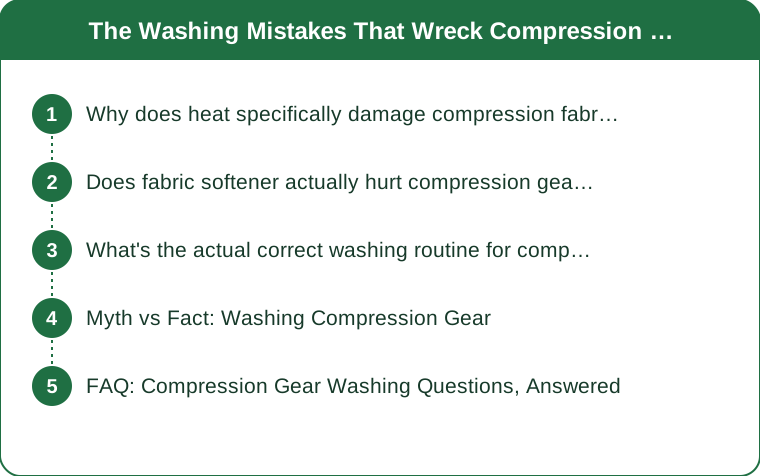
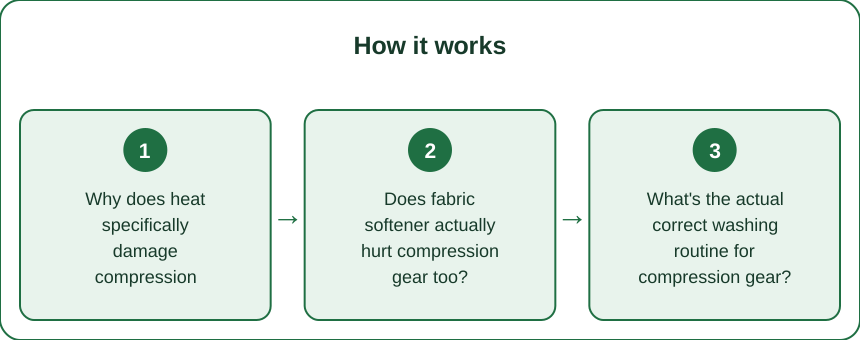
Why does heat specifically damage compression fabric?
Elastane (spandex), the fiber responsible for compression’s stretch and snap-back, breaks down structurally when exposed to sustained heat — both hot wash water and especially machine dryer heat accelerate this breakdown well beyond what normal wear and cold washing would cause on their own.
Does fabric softener actually hurt compression gear too?
Yes — fabric softener coats fibers with a residue that reduces the fabric’s ability to wick moisture and can also degrade elastane’s stretch properties over repeated washes, even though it’s marketed as gentle care.

What’s the actual correct washing routine for compression gear?
Wash in cold water on a gentle cycle, skip fabric softener entirely, and air dry flat or hanging rather than using a dryer — this combination is the single biggest factor in how long compression gear maintains its actual compression level, not just its appearance.
Myth vs Fact: Washing Compression Gear
Myth: Hand washing is required to protect compression gear. Fact: a gentle machine cycle in cold water is fine for most compression garments — the temperature and drying method matter far more than hand vs. machine washing.
Myth: If the garment still looks fine, the compression is still working the same. Fact: elastane can lose meaningful compressive strength before any visible change in appearance, so looks alone aren’t a reliable indicator.
Myth: Fabric softener makes compression gear last longer by keeping it soft. Fact: it does the opposite — softener residue degrades both moisture-wicking and elastic performance over repeated use.
FAQ: Compression Gear Washing Questions, Answered
How often should compression gear actually be washed?
After every wear for hygiene, since compression garments are typically worn close to skin during sweat-producing activity — but always using the cold-water, no-softener approach to protect the fibers each time.
Is there a way to tell if compression gear has actually lost effectiveness from bad washing?
A noticeably looser feel compared to when new, or the garment sliding down during wear when it didn’t before, both indicate meaningful elastane breakdown regardless of washing method used.
Does air drying take significantly longer than machine drying?
Yes, typically several hours versus under an hour in a dryer, but laying flat on a towel rather than hanging (which can stretch the fabric under its own wet weight) speeds this up somewhat while still avoiding heat damage.
TL;DR:
- Heat from hot water and machine drying breaks down elastane faster than normal wear does
- Fabric softener degrades both moisture-wicking and compression performance despite seeming gentle
- Cold water, gentle cycle, and air drying is the routine that actually preserves compression
- A garment can lose real compressive strength before it looks any different
Check your washing routine tonight — if you’ve been using hot water or the dryer, that’s likely why gear feels less snug than when you bought it.
See It in Motion
Seen here: Bootcut Capri Yoga Pants with Pockets — shop similar styles on bubblelime.com
Keep Reading
This article is for general informational and styling purposes only. Fit, sizing, and product availability may vary.