How Long Compression Gear Actually Stays Effective Before It Stops Working
Quick Answer: Most compression garments lose meaningful graduated pressure after roughly 30-40 wears or 3-6 months of regular use, even if they still look and fit fine visually. The elastane breaks down gradually, so the garment can look unchanged while providing noticeably less actual compression.
Your compression socks or sleeves still look intact and go on the same as always, but the point of compression is the pressure gradient — and that’s the part that quietly disappears first, well before the fabric looks worn.

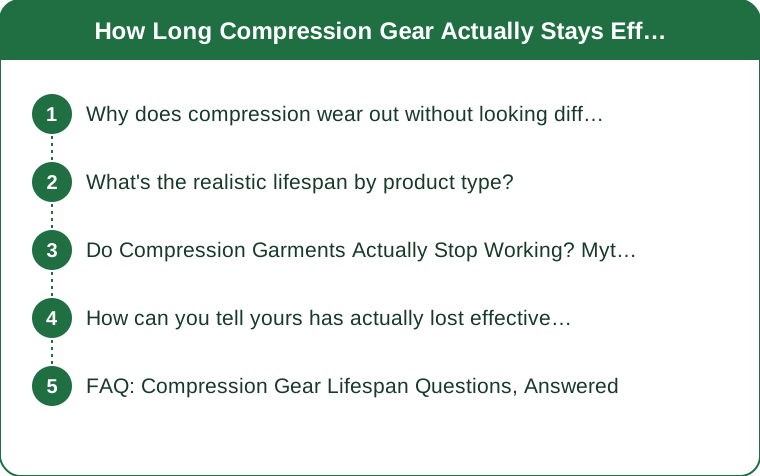
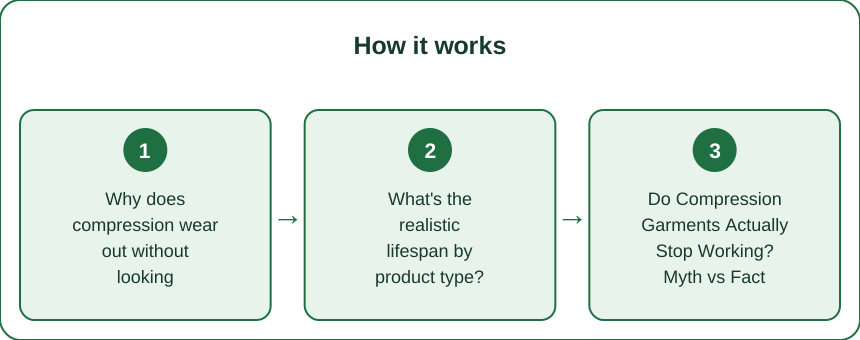
Why does compression wear out without looking different?
The graduated pressure comes from elastane fibers woven at specific tensions, and those fibers lose elasticity through repeated stretching and washing long before the outer fabric shows visible wear. A sleeve can look brand new while providing 20-30% less actual compression than when purchased.
What’s the realistic lifespan by product type?
Medical-grade compression socks: often rated for 3-6 months of daily wear by manufacturers. Athletic compression sleeves/tights: typically 30-40 wears, roughly 3-4 months for someone using them 2-3x weekly. Looser “compression-style” leggings (marketed loosely): less true graduated pressure to begin with, so degradation matters less since they weren’t providing strong compression anyway.

Do Compression Garments Actually Stop Working? Myth vs Fact
Myth: If it still feels snug, it’s still working. Fact: Snugness and graduated pressure aren’t the same thing — a garment can feel tight while the pressure gradient (tighter at ankle, looser higher up) that makes compression effective has flattened out.
Myth: Hand-washing prevents this entirely. Fact: Hand-washing slows elastane breakdown versus machine washing/drying, but doesn’t stop it — normal wear-and-stretch cycles cause fatigue regardless of wash method.
How can you tell yours has actually lost effectiveness?
Compare a new garment’s grip on your calf to your current one side by side — a noticeably looser feel at the ankle specifically (where pressure should be highest) is the clearest sign. If you no longer feel the size difference between ankle and calf tightness, the gradient is gone even if the garment still fits.
FAQ: Compression Gear Lifespan Questions, Answered
Does washing method affect how long compression lasts?
Yes — cold hand-wash and air dry meaningfully extends elastane life versus hot machine wash and dryer heat.
Should I replace all compression gear on a schedule?
For medical compression prescribed by a provider, follow their replacement timeline strictly. For athletic/recovery use, the 3-4 month mark is a reasonable check-in point.
Is expired compression gear harmful to wear?
Not harmful, just less effective — you’ll get comfort and mild support but not the graduated circulation benefit it was designed for.
TL;DR:
- Graduated pressure fades in 30-40 wears or 3-6 months, often before the fabric looks worn
- Athletic sleeves/tights degrade faster than medical-grade compression socks
- “Still feels snug” isn’t the same as “still has the pressure gradient”
- Cold hand-wash and air dry meaningfully extends how long real compression lasts
See It in Motion
Seen here: Bootcut Capri Yoga Pants with Pockets — shop similar styles on bubblelime.com
Keep Reading
This article is for general informational and styling purposes only. Fit, sizing, and product availability may vary.