How Do You Know When Your Compression Gear Has Stopped Actually Working?
Quick Answer: Compression garments typically lose meaningful effective compression after roughly 20-30 washes or 3-6 months of regular use, well before visible wear (holes, fading) usually appears, which means most people keep wearing compression gear for its intended benefit well past the point it’s actually still providing it.
Your compression socks or sleeves still look fine, so you’ve kept wearing them for their intended benefit. The elastic fibers providing actual compression typically degrade faster than the fabric’s visible appearance does.

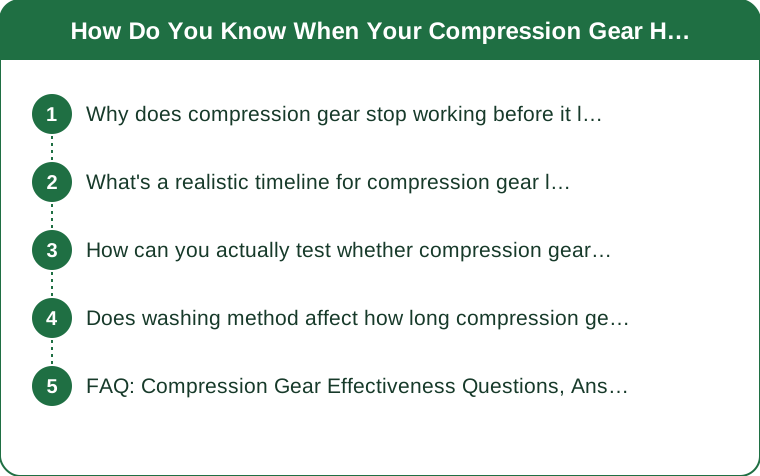
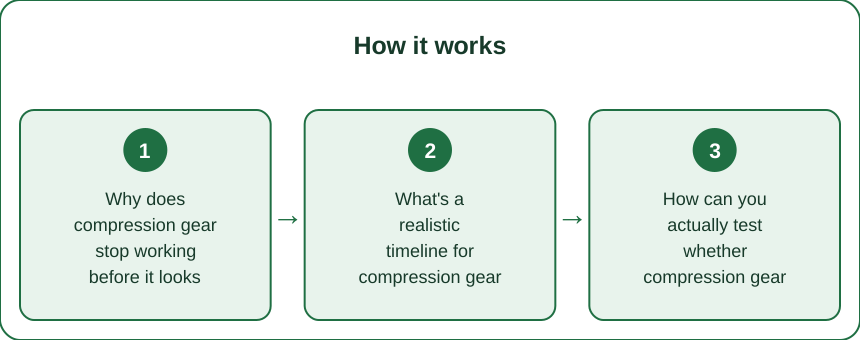
Why does compression gear stop working before it looks worn out?
The elastic fibers (often spandex or similar materials) responsible for actual compressive force degrade with repeated stretching, washing, and heat exposure, while the outer fabric appearance can remain largely intact much longer. Visual wear and functional compression loss are on different timelines.
What’s a realistic timeline for compression gear losing effectiveness?
Roughly 20-30 wash cycles, or about 3-6 months of regular use, is a commonly cited general range for meaningful compression loss in graduated compression garments, though this varies by garment quality and how it’s cared for.

How can you actually test whether compression gear is still effective?
A simple check: if the garment goes on noticeably easier than it used to, or doesn’t feel snug in the way it did when new, that’s a practical sign compression has degraded — official compression measurement requires lab equipment, but this comparative feel test is a reasonable proxy for most people.
Does washing method affect how long compression gear lasts?
Yes significantly — high heat (hot water or dryer heat) accelerates elastic fiber breakdown more than any other factor. Washing in cold water and air drying meaningfully extends functional compression life compared to regular hot washing and machine drying.
FAQ: Compression Gear Effectiveness Questions, Answered
Is it worth buying higher-quality compression gear for a longer lifespan?
Generally yes — higher-quality graduated compression garments, properly cared for, tend to maintain effective compression longer than budget alternatives, which is relevant if you rely on the compression for a specific medical or athletic purpose.
Should medical-grade compression be replaced more carefully than athletic compression?
Yes — medical-grade compression prescribed for a specific condition should follow replacement guidance from a healthcare provider rather than general athletic gear timelines, since the effective compression level matters more precisely there.
Does rotating between multiple pairs extend overall lifespan?
Yes — alternating between two or more pairs reduces total wash and wear cycles per garment, which can meaningfully extend how long each pair remains effectively compressive.
TL;DR:
- Elastic fibers degrade faster than visible fabric wear, so compression can fail before it looks worn out
- Roughly 20-30 washes or 3-6 months is a general timeline for meaningful compression loss
- A noticeably easier fit than when new is a practical sign it’s time to replace
- Cold washing and air drying meaningfully extend functional compression lifespan
This is general information, not medical advice — anyone using compression for a specific medical purpose should follow their provider’s replacement guidance.
See It in Motion
Seen here: Bootcut Capri Yoga Pants with Pockets — shop similar styles on bubblelime.com
Keep Reading
This article is for general informational and styling purposes only. Fit, sizing, and product availability may vary.