The Compression Garment Wear-Out Sign You Can't See (But Can Feel)
Quick Answer: Compression garments can lose most of their functional compression while still looking visually intact, since the elastic fibers degrade internally before any visible stretching or fading shows. A simple feel test - comparing snugness to when the item was new - catches this better than a visual inspection alone.
A compression legging or sock can look exactly like it did on day one and still be providing a fraction of the support it used to - the wear-out here happens where you can’t see it.

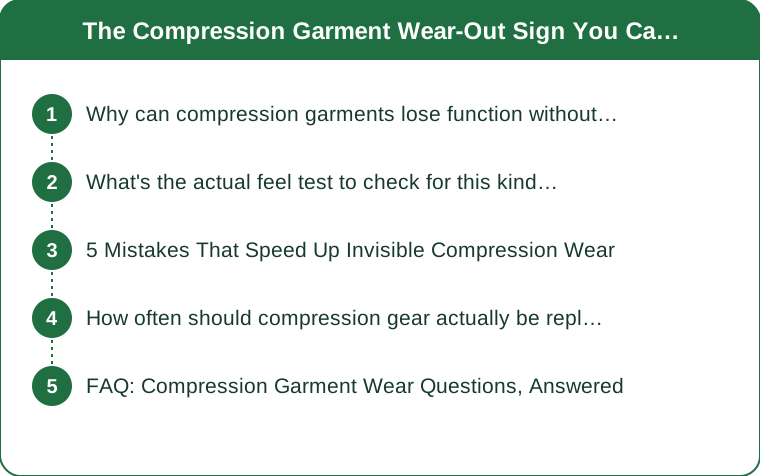
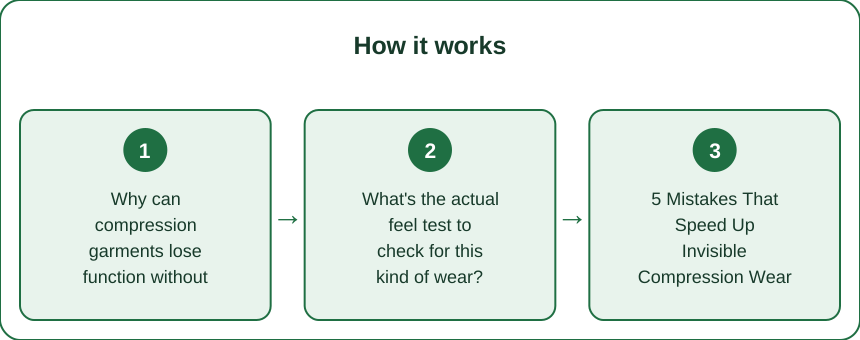
Why can compression garments lose function without any visible change?
The compressive effect comes from elastic fibers (usually spandex or elastane) woven into the fabric, and these fibers lose elasticity through repeated stretching and washing well before the outer fabric shows any visible wear. The visible fabric - the part your eyes actually judge - can remain intact and unfaded long after the internal elastic structure has degraded significantly.
This is fundamentally different from how most clothing wears out, where visible fading or pilling tends to track reasonably well with overall garment condition - compression gear’s most important property degrades on a separate, invisible timeline.
What’s the actual feel test to check for this kind of wear?
Compare how snug the garment feels going on now versus your memory (or a note) of how it felt when new - genuine compression gear should feel notably snug and require some effort to pull on; if it now goes on easily and feels closer to regular leggings or socks, functional compression has likely degraded significantly regardless of visual appearance.
Checking for visible sag or bagging at typically tight points (ankles for compression socks, waistband for leggings) after a few hours of wear is another practical signal - properly functioning compression shouldn’t visibly loosen throughout a wear session the way degraded compression does.

5 Mistakes That Speed Up Invisible Compression Wear
1. High-heat washing or drying, which breaks down elastic fibers significantly faster than the visible fabric shows. 2. Over-stretching during put-on, particularly rolling or yanking rather than a controlled pull, which stresses fibers unevenly. 3. Storing folded with sharp creases for long periods, which can create permanent stress points in the elastic structure. 4. Washing too infrequently, allowing sweat salt and oils to build up and stiffen fibers in a way that actually accelerates breakdown rather than preserving the garment. 5. Assuming visual condition equals functional condition, which delays replacement of gear that’s no longer providing meaningful compression despite looking fine.
How often should compression gear actually be replaced given this invisible wear?
Frequently used compression gear (worn several times weekly) commonly loses meaningful effectiveness within 3-6 months, even when it looks unworn, due to the elastic-fiber degradation timeline being largely independent of visible fabric condition. Occasional-use gear can last considerably longer functionally, since the elastic fiber stress accumulates through wear cycles rather than simple calendar time.
Setting a reminder to do the feel test every 8-10 weeks for regularly used gear catches the functional decline before you’re wearing gear that provides only cosmetic, not actual, compression.
FAQ: Compression Garment Wear Questions, Answered
Does this invisible wear happen at the same rate for all compression garment types?
No - higher-compression medical-grade garments and athletic recovery gear tend to degrade faster under regular use than milder, everyday compression wear, simply due to the greater elastic stress involved in higher compression levels.
Can washing method meaningfully extend functional lifespan?
Yes - cold water washing and air drying (avoiding high heat entirely) meaningfully slows elastic fiber breakdown compared to hot washing and machine drying, extending functional life by a noticeable margin.
Is there a way to test compression level more precisely than the feel test?
Some specialty retailers and medical supply stores can measure actual compression output, though this is typically only necessary for medical-grade compression prescribed for a specific condition rather than general athletic or everyday compression wear.
TL;DR:
- Compression garments can lose function internally long before any visible fabric wear appears
- A feel test comparing current snugness to when new catches this better than looking at the fabric
- High-heat washing and drying is the single biggest accelerant of invisible elastic fiber breakdown
- Frequently used gear often needs replacing functionally within 3-6 months regardless of visual condition
If compression gear looks fine but doesn’t feel as snug as it used to, trust the feel - the visible fabric is the last thing to show this particular kind of wear.
See It in Motion
Seen here: Super High Waist Embossed Yoga Leggings with Inner Pocket — shop it on bubblelime.com
Keep Reading
This article is for general informational and styling purposes only. Fit, sizing, and product availability may vary.